

Self Propelled Wheelchairs
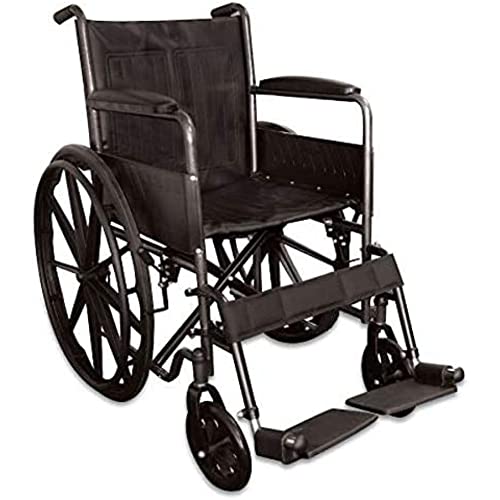
Self-propelled wheelchairs are for people who are able to propel themselves. You can have fun and maintain or regain independence by being able to move your chair on your own.
Some self-propelled wheelchairs come with pushing handles, so that they can be driven by a person else when needed. This reduces the need to exert significant upper body strength to push the wheelchair, which can lead to arm injuries.
Easy manoeuvrability
In contrast to power wheelchairs, which are powered by an electric motor, self-propelled chairs rely on the user's strength to push them forward. This means that they can be easily manoeuvred around furniture, narrow corners, and other obstacles without assistance.
They are a great choice for people who want to maintain or regain their independence. In addition, they can also be a beneficial form of physical exercise. By using their strength in the upper body, they can engage muscles and boost cardiovascular health. A majority of self-propelled chairs offer various features that can be adjusted that can be tailored to the individual's needs.
In contrast to standard manual wheelchairs, which are designed with the rear wheels at the back of the chair, self propelled chairs feature large rear wheels and push-rims, which make it easier to move them using a hand. Self-propelled chairs are lighter than electric wheelchairs, which means they take up less room in your home, and are also easier to transport on public transportation.
When choosing a self-propelled wheelchair, it's important to take into account the user's requirements and lifestyle. For instance, they may require a wheelchair that is puncture-proof or outdoor specialty tires that allow the use of the vehicle off-road or on rough terrain. Some clients might require a specific frame in order to ensure that their feet are able to easily reach the pedals.
It is also important to consider the seat-to-floor height. For instance, those with hemiparesis, who only have a function on one side of their body, need a chair with a low seat-to-floor elevation so that they can propel themselves by using their hands.
A client's ability to reach the front wheel is a different aspect. Idealy they should be capable of touching the centre of the front wheel using their index fingers and thumbs However, this will depend on the level of their use and how they are situated relative to the ground that the wheels are.
Finally, it's worth considering powered add-ons. Highly recommended Internet site can reduce the strain on the body of the user which allows them to conserve their energy for other activities. They're not suitable for all. For instance, they may not be appropriate for those who need a heavy-duty chair or have a lot of mobility issues.
Greater independence
Self-propelled wheelchairs give the user the ability to move themselves and allow them to be independent. It allows the user to control their movement, so they can navigate crowded spaces and furniture effortlessly. It also lets them move at their own pace, so they can traverse long distances on challenging terrain. In the end, this freedom is vital for the health of the user and their social participation.
It is important to note that a self propelled wheelchair requires both arms, which could cause injuries to the arms when the motions aren't executed correctly. Get a therapist to train you to ensure that you don't be injured.
Self-propelled chairs, as opposed to transit wheelchairs, feature larger rear wheels that have push rims. This allows users to control the chair independently. They are more suitable for outdoor use because they are able to adapt to different kinds of terrain and even go up and over small curbs.
The study recruited 15 healthy adults with mobility requirements. The participants were tested in three different situations that included straight forward (15 millimeters), an slalom (nine cones, arranged and separated by decreasing distances) and an agility test. The participants were asked to push their wheelchairs on each of these trials, and to answer the Perceived Exercise Questionnaire. Oxygen consumption and heart rate were continuously monitored using an oxygen analyser portable (Cateye Cycle Computer Velo 8; Osaka Japan) during the propulsion test and during resting periods.
The results revealed that an electric wheelchair was less effective in maneuvering difficult terrain than a self-propelled wheelchair. This is because of the large rear wheels that are fitted with push rims, which enable the user to move their wheelchair with greater speed and precision. The lightweight design of these wheelchairs allows them to be easily stacked and transported.
Improved fitness
Self-propelled wheelchairs are the ideal choice for mobility impaired people, as they enable them to move with no one else pushing them. This can help you retain or restore your independence and give you a whole new lease on life. You can use your wheelchair in a variety of situations and are not restricted to indoor locations.
Contrary to transit wheelchairs (which have small rear wheels and can only be moved with pushing) Self-propelled chairs have larger rear wheels and pushing handles that the user can reach to propel themselves. This means you can move further on your own, which could assist in improving your fitness and health.
This is particularly important for those who have chronic mobility issues, since prolonged stress on the upper body can cause pain and injuries. This could prevent people from participating in physical activity, and could cause a sedentary that can complicate their health. A self-propelled seat can help reduce pressure on the upper body, preventing these issues.
Wheelchairs are also fitted with motorized accessories that help the user move forward. This decreases the effort of the user and allows them to save their energy for other uses. This is especially useful for those who have trouble maneuvering on bumpy or uneven surfaces like kerbs or slopes.
Powered add-ons can be fitted to any type of manual wheelchairs. Many are controlled via Bluetooth or smartwatches. This makes them extremely popular with younger users who are familiar with technology and enjoy the idea of being able to use their mobile devices to navigate their wheelchairs.
Research has revealed that seat height plays a major role in cardiorespiratory response and mechanical efficiency when manual wheelchairs are driven at submaximal levels. A study has found that the optimal seat heights for this type of wheelchair are about 100 degrees, which is ideal for reducing the strain placed on shoulder muscles. This is crucial for those who have injuries to soft tissues around the shoulder.
Convenient storage
Many customers who utilize a wheelchair regular basis have to think about how they can store it at home and while traveling. To aid in this, a variety of specialist manufacturers offer efficient storage solutions. For instance the XS2 Self Propelled Wheelchair has the front wheels swivel making it easier to manoeuvre indoors or in tight spaces. These wheels are also low maintenance with puncture-proof tyres to ensure the most comfortable ride. The XS2 is also available in a range of seat widths, which will accommodate different types of users. The chair comes with two parking brakes for added safety. One can be operated while sitting in the chair and the other is operated by an attendant.
Another consideration is the weight of the wheelchair. There are lighter wheelchairs but they might not be suitable in some outdoor environments like national parks and beaches. Alternatively, some models have removable armrests to make transporting the chair easier.
The main reason for choosing a self-propelled wheelchair is to regain freedom and independence, and to get around without needing to depend on others. Some customers find that it makes them feel re-energised and gives them a fresh lease of life. However, they require some upper body strength and it's crucial to know your limits before buying one.
Other advantages of a self propelled wheelchair include being able to maneuver the chair on flat surfaces. Certain chairs can be adjusted for different terrains, but this is only an interim solution. If the chair will be used outdoors, it might be best to choose an electric chair with tyres specifically designed for different terrains.
Certain models are designed to be maneuverable by having a stiff frame. This can help reduce the energy needed to propel the wheelchair. These types of wheelchairs tend to be lighter than folding chairs since they don't have to contain an extension mechanism that extends the frame.
To allow a client to move the chair with their feet the rear wheels are generally larger and fitted with a push-rim. Some clients, like those with hemiparesis who choose to propel their chairs using their feet require that the rear wheels be lower in order to allow them to reach.